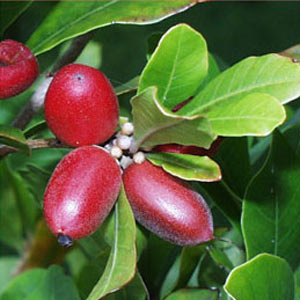
Miracle Berry, or Synsepalum dulcificum, is berry that tricks the tongue into tasting sour foods as sweet. Lemons, limes, shots of vinager? All delicious under the power of this weird fruit. I first tried it when the food club on campus, called NOM, decided to host a tasting. Everyone brought their sour and bitter things, salt and vinegar chips, pickles, and NOM brought the berries. It was the weirdest experience I’ve ever had.
Apparently what happens is that the berry has a particular glycoprotein molecule called miraculin (get it?) that, when eaten, binds to the tongue’s taste buds, distorting the shape of sweetness receptors so that they respond to acids instead of sugars. The experience can last from 15-30 minutes, and doesn’t have any side effects, so it’s essentially harmless. The fruit is popular in Japan as a weight loss and diabetic tool, but has recently gained popularity in the US in the form of “flavor tripping parties.”

What does this have to do with literature? The ability to trick the senses has long been a trope in Dystopian literature. Brave New World and 1984 both used the senses as a way to increase control. One over stimulated the pleasurable senses (eliminating negative feelings much like the miracle berry eliminates sour or bitterness), whereas another tried to trick them all together (2+2=5). This doesn’t necessarily mean that we’re on the verge of some dystopian future, but it does beg the question: If we can trick our tongues with miraculin, what else can be tricked with simple chemicals?

This is amazing. Does it make vegetables taste better?
ReplyDelete